
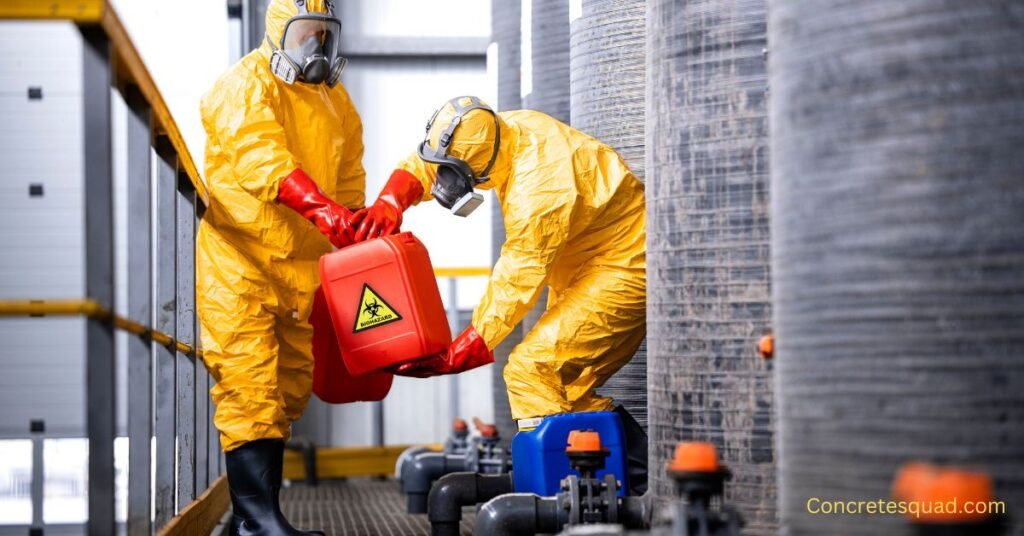
Handling concrete chemicals necessitates meticulous safety measures and regulatory adherence. Always wear appropriate personal protective equipment, including nitrile gloves, respirators, and safety goggles, to prevent chemical exposure. Store chemicals in compatible, labeled containers and maintain well-ventilated areas to minimize toxicity. Regular inspections are essential to detect leaks or deterioration. Implement emergency response procedures, including spill containment plans and first aid protocols. Compliance with OSHA and EPA guidelines ensures both worker safety and environmental protection. Continuous training reinforces these practices, providing staff with necessary knowledge. Explore further to understand more critical aspects of safe handling and regulatory requirements.
Although concrete is often perceived as a simple construction material, the chemicals involved in its formulation play a crucial role in determining its performance and durability. The incorporation of concrete additives—such as plasticizers, retarders, and accelerators—can significantly enhance the properties of concrete, impacting its workability, setting time, and long-term strength.
Understanding these additives is essential for achieving optimal results in various construction applications.
The effectiveness of concrete additives is largely influenced by the chemical interactions that occur during the mixing process. These interactions can alter the hydration process of cement, affecting the formation of calcium silicate hydrate, which is pivotal for concrete strength.
Additionally, the compatibility of different additives must be carefully considered, as some may react adversely, leading to compromised performance.
Moreover, the proper dosage of these additives is critical; excessive amounts can lead to undesirable outcomes, such as reduced strength or increased permeability.
Therefore, a thorough understanding of the chemical properties and interactions of concrete additives is imperative for construction professionals aiming to optimize concrete performance while ensuring long-lasting durability in their projects.
How can construction professionals ensure their safety while handling concrete chemicals? The use of appropriate personal protective equipment (PPE) is paramount in mitigating exposure risks.
First and foremost, gloves selection is critical; professionals should opt for chemically resistant gloves that provide adequate protection against the specific substances being handled. Nitrile and neoprene gloves are often recommended due to their durability and resistance to many concrete chemicals.
In addition to gloves, the use of respirators is essential, particularly in environments where airborne particles or vapors are present. A properly fitted respirator can significantly reduce inhalation risks associated with hazardous fumes or dust generated during the handling of concrete chemicals.
It is vital to select a respirator that meets the required protection level based on the chemical exposure risk.
Moreover, other PPE, such as safety goggles, face shields, and protective clothing, should complement gloves and respirators to provide comprehensive protection.
Safe handling practices for concrete chemicals are essential to ensure worker safety and environmental protection.
This includes the consistent use of personal protective equipment (PPE) and adherence to proper storage techniques to minimize risks of exposure and contamination.
When handling concrete chemicals, the use of appropriate personal protective equipment (PPE) is essential to minimize the risk of exposure and ensure worker safety.
Properly selected PPE not only protects against chemical burns and respiratory issues but also promotes a culture of safety in the workplace.
To effectively safeguard yourself, consider the following essential PPE items:
Effective storage techniques are crucial for maintaining the integrity of concrete chemicals and ensuring workplace safety. Proper storage not only preserves the shelf life of these materials but also minimizes risks associated with hazardous substances.
To begin, it is essential to store concrete chemicals in a cool, dry environment, where temperature control is paramount. Excessive heat can accelerate chemical reactions, leading to deterioration and potential hazards. Therefore, maintaining a consistent, moderate temperature is critical.
Additionally, chemicals should be organized in a manner that prevents cross-contamination. Clearly label all containers with their contents, hazard warnings, and expiration dates. This practice aids in effective inventory management and reduces the likelihood of using expired materials, which may compromise project quality and safety.
Furthermore, ensure that storage areas are well-ventilated to disperse any harmful vapors, and avoid direct sunlight exposure to minimize degradation.
Regular inspections of storage conditions and chemical integrity should be conducted to identify any leaks or signs of deterioration promptly. By adhering to these proper storage techniques, organizations can safeguard both their workforce and the efficacy of concrete chemicals.
Proper storage of chemicals is essential to ensure safety and compliance with regulatory standards. Adhering to appropriate guidelines can mitigate risks associated with chemical handling and prevent accidents.
To achieve optimal safety, consider the following key principles:
In the event of an incident involving concrete chemicals, it is essential to have clear emergency response procedures in place.
This includes understanding first aid measures for exposure, implementing spill containment protocols to minimize environmental impact, and adhering to reporting incident procedures to ensure accountability and safety.
Proper training and preparedness can significantly mitigate the risks associated with chemical handling.
Timely and appropriate first aid measures are crucial when dealing with chemical exposure related to concrete. Exposure to hazardous chemicals can lead to serious health issues, including chemical burns, requiring immediate attention.
It is essential to have a well-stocked first aid kit readily available on-site to address such emergencies effectively.
In the event of chemical exposure, consider the following steps:
Chemical spills can pose significant risks not only to individuals but also to the surrounding environment. Effective spill response is crucial in mitigating these risks and ensuring safety. Establishing clear containment strategies is the first step in addressing a spill incident. Organizations should develop a comprehensive spill response plan that includes identification of materials, training personnel, and maintaining appropriate containment equipment.
Upon detecting a spill, personnel must immediately implement the established protocols. This includes assessing the situation to determine the nature and extent of the spill. Containment strategies may involve using absorbent materials, such as pads and booms, to limit the spread of chemicals. Additionally, barriers such as dikes or trenches can be constructed to prevent further leakage into vulnerable areas.
It is essential to follow proper procedures when handling spilled materials. Personnel should wear appropriate personal protective equipment (PPE) and work in pairs to ensure safety during clean-up activities.
After containing the spill, disposal of contaminated materials must adhere to local regulations and guidelines. By prioritizing spill containment protocols, organizations can significantly reduce the potential hazards associated with chemical spills and protect both human health and the environment.
Effective incident reporting procedures are vital for ensuring a swift and coordinated emergency response. Proper reporting protocols not only facilitate immediate action but also aid in incident documentation, which is crucial for future prevention and regulatory compliance.
To enhance your understanding of the importance of these procedures, consider the following:
In any incident, personnel should be trained to follow established reporting protocols. This includes identifying the nature of the incident, notifying appropriate authorities, and completing necessary documentation promptly.
Clear communication is paramount; everyone involved should understand their roles and responsibilities in the response process. By adhering to these procedures, organizations can not only mitigate immediate risks but also foster a culture of safety and preparedness for the future.
Proper management of waste disposal regulations is crucial for maintaining environmental integrity and public safety in the concrete industry. The disposal of hazardous waste, which may include contaminated water, chemical residues, and unused concrete materials, must adhere to strict guidelines set forth by local, state, and federal authorities.
Failure to comply with these regulations can result in severe environmental damage and legal repercussions.
Various disposal methods are available for handling hazardous waste, including recycling, incineration, and landfilling, each governed by specific regulations. Recycling processes must ensure that materials are repurposed safely, while incineration must be conducted in facilities equipped to manage emissions and byproducts effectively.
Landfilling, on the other hand, requires proper containment to prevent leachate from contaminating soil and groundwater.
It is essential for industry professionals to regularly review and understand these waste disposal regulations to implement appropriate measures. This not only protects public health and the environment but also fosters a culture of compliance within the organization.
A commitment to responsible waste management practices will enhance operational efficiency and contribute to the overall sustainability of the concrete industry.
Understanding waste disposal regulations highlights the importance of comprehensive training and education requirements for personnel in the concrete industry. Proper training ensures not only compliance with safety standards but also the protection of workers and the environment. Given the hazardous nature of concrete chemicals, specific training methods and educational resources are essential for fostering a culture of safety.
Training programs should encompass the following critical elements:
Incorporating a variety of training methods, such as hands-on workshops, online courses, and collaborative drills, can enhance understanding and retention.
Regulatory compliance standards play a pivotal role in the management of concrete chemicals, ensuring that organizations adhere to legal and safety requirements. These standards encompass a range of local, state, and federal regulations, including the Occupational Safety and Health Administration (OSHA) guidelines and Environmental Protection Agency (EPA) requirements. Organizations must stay informed about regulatory updates to maintain compliance and safeguard the health of workers and the environment.
Regular compliance audits are essential for identifying potential gaps in adherence to these standards. These audits involve a systematic review of processes, documentation, and chemical management practices, enabling organizations to detect non-compliance early and take corrective actions.
Furthermore, audits reinforce a culture of safety and accountability, fostering an environment where employees are empowered to report safety concerns without fear of reprisal.
Organizations should also consider maintaining an open dialogue with regulatory bodies to ensure they are not only compliant but also prepared for any upcoming changes in legislation.
In summary, the handling of concrete chemicals necessitates a vigilant approach, ensuring safety and compliance with established regulations. By embracing prudent practices and fostering a culture of education, potential hazards can be mitigated effectively. The importance of a well-structured response to emergencies and proper waste management cannot be overstated. A commitment to safeguarding both personnel and the environment paves the way for a harmonious relationship with these essential materials, transforming challenges into opportunities for responsible stewardship.
 Call Now