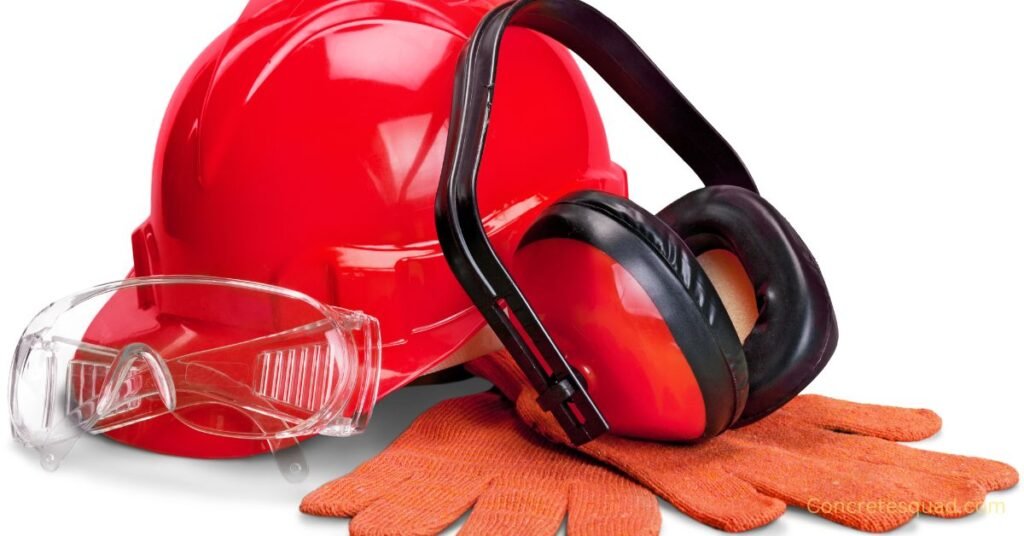
Concrete workers face numerous hazards, necessitating robust safety gear. Essential eye protection safeguards against dust and debris, while respiratory masks filter harmful airborne particles. Hearing protection, such as earplugs or earmuffs, combats noise-induced hearing loss. Durable gloves protect hands from abrasions and chemicals, and steel-toed boots offer crucial foot protection. Hard hats shield against head injuries, while knee pads enhance comfort during prolonged kneeling. For elevated work, fall protection harnesses are indispensable. High-visibility clothing ensures workers are seen in low-light conditions. An understanding of this equipment is vital for maintaining a safe work environment and promotes overall safety culture. Explore further for comprehensive details.
Eye protection is an indispensable component of safety gear for concrete workers, as it safeguards against a variety of hazards present in the work environment. The nature of concrete work often involves exposure to flying debris, dust, and chemical splashes, all of which pose significant risks to eye health.
To mitigate these dangers, it is essential for workers to wear appropriate eyewear equipped with protective lenses. Protective lenses must meet specific safety standards to ensure they effectively shield the eyes from impact and harmful particles.
Additionally, many protective lenses offer UV protection, which is crucial for workers who frequently operate outdoors. Prolonged exposure to ultraviolet rays can lead to serious eye conditions, including cataracts and other vision impairments.
Selecting eyewear that combines impact resistance with UV protection is vital for maintaining ocular health. Furthermore, comfort and fit should not be overlooked, as poorly fitting eyewear can lead to reduced compliance among workers.
Respiratory masks are a critical component of safety gear for concrete workers, as they provide essential protection against harmful airborne particles and hazardous substances commonly encountered on the job site. Concrete dust, silica, and chemical vapors pose significant risks to respiratory health, making the use of appropriate masks vital for long-term well-being.
There are several mask types available, each designed to address specific hazards. N95 respirators, for example, filter out at least 95% of airborne particles, offering basic protection against dust and non-oil-based aerosols.
For environments with higher levels of toxicity, half-mask or full-face respirators equipped with replaceable filters or cartridges may be necessary. These provide a more robust defense against gases and vapors that could lead to serious health issues.
Selecting the right respiratory mask is crucial; it should fit snugly and be suitable for the specific conditions of the work environment. Regular inspection and maintenance of the masks are equally important to ensure optimal performance.
Concrete workers are often exposed to high levels of noise, which can lead to noise-induced hearing loss over time.
To mitigate this risk, it is essential to understand the various types of hearing protection available, such as earplugs and earmuffs.
Implementing appropriate hearing protection not only safeguards workers' auditory health but also enhances overall workplace safety.
Hearing protection is a critical component of safety gear for workers in environments where loud machinery and equipment are prevalent. Noise-induced hearing loss (NIHL) is a significant risk for concrete workers exposed to high sound levels over prolonged periods. The impact of this condition can be profound, affecting communication, job performance, and overall quality of life.
Therefore, it is essential to implement robust hearing conservation programs that include education, regular training, and the provision of appropriate hearing protection.
A key aspect of these programs is noise exposure monitoring, which helps identify areas and tasks that present elevated risks. By assessing sound levels, employers can better understand when and where protective measures are necessary, ensuring that workers are not unnecessarily exposed to harmful noise.
These monitoring efforts also inform the selection of suitable hearing protection devices tailored to the specific noise environments encountered on job sites.
Incorporating effective hearing conservation programs and diligent noise exposure monitoring not only protects workers but also fosters a culture of safety and awareness, ultimately leading to healthier workplace practices in the concrete industry.
Effective hearing protection is vital for safeguarding workers in noisy environments, particularly in the concrete industry. Prolonged exposure to high noise levels can lead to hearing loss, making the selection of appropriate protective gear crucial.
There are several types of hearing protection available, each suitable for different scenarios. Earplugs are a common choice, with options ranging from disposable foam plugs to advanced custom earplugs that offer a tailored fit for enhanced comfort and noise reduction.
Custom earplugs are particularly beneficial for workers who require prolonged usage, as they can significantly improve both protection and comfort.
Another option is earmuffs, which can provide a higher level of sound attenuation. Many earmuffs are equipped with active noise control technology, which actively reduces ambient noise while allowing for clear communication among workers. This is especially important on busy construction sites where verbal instructions are frequent.
Ultimately, the choice of hearing protection should be based on the specific noise levels and personal comfort. By investing in high-quality hearing protection, concrete workers can preserve their hearing health while performing their essential duties safely.
Durable gloves are a critical component of safety gear for concrete workers, as their material quality directly impacts protection against abrasions and chemicals.
Additionally, gloves must provide a proper fit and comfort to ensure dexterity during tasks, reducing the risk of accidents.
Selecting the right gloves can significantly enhance both safety and efficiency on the job site.
When it comes to ensuring the safety and effectiveness of concrete workers, the quality of materials used in protective gear plays a crucial role. Among the various types of protective equipment, gloves are particularly vital due to their frequent exposure to hazardous materials and rough surfaces.
The importance of material durability cannot be overstated; gloves made from high-quality materials can withstand the rigors of concrete work, reducing the risk of tears and punctures.
Investing in gloves that meet stringent quality standards is essential for providing adequate protection. Materials such as reinforced leather, synthetic polymers, and rubber composites offer varying degrees of resistance to abrasion, chemicals, and moisture, ensuring that workers remain safe in challenging environments.
Additionally, gloves that pass industry-specific tests for durability and safety can significantly enhance a worker's confidence and performance on the job.
How crucial is the proper fit and comfort of gloves in ensuring the safety and productivity of concrete workers? Durable gloves are essential for providing hand protection against harsh materials and tools commonly used in concrete work. Choosing gloves that feature proper sizing ensures they are neither too tight nor too loose, allowing for optimal dexterity and grip. Additionally, the inclusion of adjustable straps can enhance fit and comfort, accommodating various hand sizes while preventing slippage.
The following table summarizes key considerations for selecting durable gloves:
| Feature | Importance | Recommended Action |
|---|---|---|
| Proper Sizing | Ensures dexterity and protection | Measure hands before selection |
| Adjustable Straps | Provides a secure fit | Look for gloves with adjustable features |
| Material Quality | Affects durability and safety | Choose gloves made from high-quality materials |
| Comfort Level | Reduces fatigue during long tasks | Test gloves for comfort before use |
Steel-toed boots are a critical component of personal protective equipment for concrete workers, providing essential safety and comfort on the job. These boots are designed with reinforced steel caps that protect the toes from heavy objects, reducing the risk of injury from accidental drops or crushing incidents.
The steel toe benefits extend beyond mere protection; they often feature slip-resistant soles, which are vital in preventing slips and falls on wet or uneven surfaces.
To maximize the effectiveness of steel-toed boots, proper boot maintenance is essential. Regular cleaning and inspection can help identify wear and tear, ensuring the boots remain in optimal condition. It is advisable to check for signs of damage, such as cracks or deformations in the steel cap or sole, as these can compromise safety.
Additionally, keeping the boots dry and well-ventilated can prevent moisture buildup, which may lead to odor and deterioration of materials.
Investing in high-quality steel-toed boots and maintaining them diligently is crucial for concrete workers. This not only ensures personal safety but also contributes to overall workplace efficiency and morale.
High-visibility clothing plays a vital role in ensuring the safety of concrete workers by enhancing their visibility in various work environments. This type of clothing is designed to make workers easily seen, particularly in conditions with low light or high traffic, such as construction sites and highways. High-visibility garments typically incorporate reflective materials that reflect light, increasing the wearer's visibility to operators of vehicles and machinery.
To meet safety regulations, high-visibility clothing must adhere to specific color standards. These standards dictate the use of fluorescent colors such as lime yellow or orange, which provide maximum contrast against the surrounding environment. The combination of these bright colors and reflective strips ensures that concrete workers are easily identifiable, reducing the risk of accidents.
It is crucial for concrete workers to wear high-visibility clothing at all times, not only during daylight but also in the evening or during inclement weather. Employers should provide appropriate garments that meet industry standards to promote a culture of safety on the job site.
Hard hats are a critical component of safety gear for concrete workers, providing essential protection against head injuries caused by falling objects or impacts.
Understanding the various types of hard hats available is important for selecting the right one for specific job site conditions.
Proper use and maintenance of hard hats can significantly reduce the risk of serious injuries on the job.
When working in environments where heavy materials and equipment are present, the significance of wearing hard hats cannot be overstated. Hard hats serve as a crucial line of defense against head injuries resulting from falling objects, bumps, or electrical hazards. Adhering to hard hat regulations is essential to ensure that workers are adequately protected. These regulations establish standards for hard hat design, testing, and performance, ensuring that safety gear meets stringent requirements.
Proper hard hat maintenance is equally important. Regular inspections for cracks, dents, or signs of wear can determine whether a hard hat remains effective. Additionally, the lifespan of a hard hat should not exceed the manufacturer's recommendations, as materials can degrade over time.
| Key Benefits of Hard Hats | Regulations Overview | Maintenance Tips |
|---|---|---|
| Protects from head injuries | OSHA standards | Inspect regularly |
| Enhances visibility | ANSI compliance | Store away from sunlight |
| Provides electrical safety | Manufacturer guidelines | Replace after impact |
Various types of hard hats are designed to meet specific safety needs in the construction and concrete work environment. Hard hats primarily fall into two categories: Type I and Type II. Type I hard hats are designed to protect the crown of the head from falling objects, while Type II hard hats provide protection from lateral impacts, making them suitable for environments with overhead and side hazards.
The materials used in hard hat construction significantly influence their durability and effectiveness. Common hard hat materials include high-density polyethylene (HDPE), which offers excellent impact resistance and is lightweight. Another option is fiberglass, known for its robust strength and ability to withstand extreme temperatures.
In addition to these, some hard hats incorporate advanced materials like polycarbonate, which provide higher resistance to impacts and electrical hazards.
Furthermore, hard hats can be equipped with additional features, such as visors, face shields, and hearing protection, enhancing their functionality. Selecting the appropriate hard hat type and material is essential for ensuring maximum safety and compliance with industry regulations, ultimately safeguarding concrete workers in their daily tasks.
Knee pads are a critical component of essential safety gear for concrete workers, designed to provide protection and support during prolonged periods of kneeling on hard surfaces. The physical demands of concrete work often require workers to kneel for extended durations, which can lead to discomfort and even injury. Utilizing knee pads can significantly mitigate these risks.
One of the primary knee pad benefits is the reduction of pressure on the kneecaps and surrounding tissues, helping to prevent conditions such as bursitis or tendonitis. High-quality knee pads often feature ergonomic designs that conform to the natural shape of the leg, allowing for greater mobility and comfort while working.
This ergonomic approach not only enhances protection but also enables workers to maintain efficiency and productivity throughout their tasks.
Moreover, knee pads can be constructed from various materials, including gel, foam, or hard plastic, providing options that cater to individual preferences and specific job requirements.
To ensure safety at elevated work sites, fall protection harnesses are indispensable for concrete workers. These harnesses are designed to prevent falls and minimize injuries while working at heights, making them a critical component of personal protective equipment (PPE).
Before utilizing harnesses, a thorough fall hazard assessment should be conducted to identify potential risks and determine the appropriate equipment needed for the specific job site.
Proper fitting of the harness is essential; it must be snug yet comfortable to ensure maximum protection during a fall. Additionally, workers must be trained in the correct use of the harness to enhance safety.
Regular harness maintenance is vital for ensuring the equipment's effectiveness. This includes inspecting the harness for wear and tear, checking all straps and buckles, and ensuring that any necessary repairs are made before use.
Safety vests play a crucial role in ensuring visibility and protection for concrete workers on job sites. These vests are designed to enhance the wearer's visibility in various lighting conditions, which is vital in environments where heavy machinery and vehicular traffic are present.
Constructed from durable materials, safety vests often incorporate reflective materials that significantly increase visibility, especially in low-light situations. Adhering to vest regulations is essential for compliance with occupational safety standards. These regulations specify the types of materials and visibility requirements for safety vests, ensuring that they meet industry safety benchmarks.
Typically, vests are classified into different categories based on their visibility levels, with Class 2 and Class 3 vests being the most commonly used in construction and concrete work. Furthermore, safety vests should fit comfortably and allow for ease of movement, which is crucial for workers engaged in physically demanding tasks.
Regular inspections of the vests for wear and tear are necessary to maintain their effectiveness. By prioritizing the use of properly regulated safety vests, concrete workers can significantly reduce the risk of accidents and enhance overall safety on construction sites.
In the construction realm, safety gear serves as the armor for modern-day warriors battling the formidable forces of concrete and machinery. Each piece of equipment, from eye protection to fall harnesses, forms a vital part of the protective shield, safeguarding against unseen dangers. Just as knights donned their armor before entering battle, so too must concrete workers equip themselves with essential safety gear to ensure their well-being. Ultimately, the diligent use of this protective attire fosters a safer and more productive work environment.
 Call Now