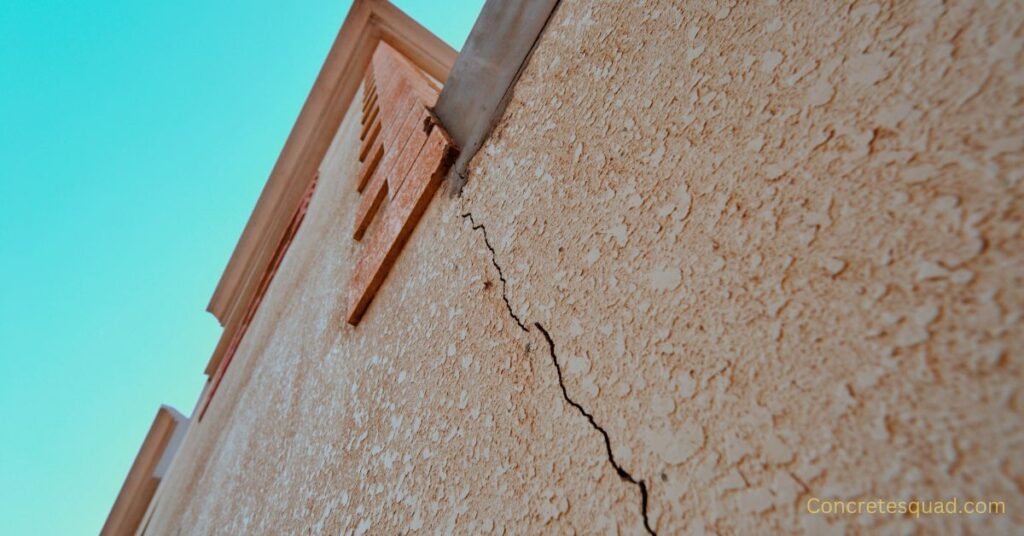
To prevent concrete from cracking, focus on several key factors. First, use a well-designed mix with an optimal water-cement ratio between 0.4 and 0.6. Ensure proper site preparation through adequate grading and compaction. Control water usage and employ effective curing methods to maintain moisture levels. Reinforcement techniques, such as fiber, rebar, or mesh, enhance tensile strength and reduce the risk of shrinkage cracks. Finally, monitor environmental conditions that may influence drying rates. Incorporating these strategies establishes a resilient foundation, critical for durability and performance. Further insights into advanced techniques await exploration.
Although concrete is often perceived as a singular material, it is, in fact, a complex composite comprising various constituents that significantly influence its performance and durability. The primary components of concrete include cement, water, aggregates, and admixtures, each contributing to specific concrete properties such as strength, workability, and resistance to cracking.
The mix design is crucial in determining the proportions of these constituents, as it directly affects the concrete's mechanical and physical characteristics. A well-optimized mix design ensures an appropriate balance between the water-cement ratio and aggregate gradation, which enhances the cohesion of the mixture and reduces the likelihood of cracking during curing and hardening.
Moreover, the selection of high-quality materials is vital; for instance, the type of cement can influence the hydration process, while the size and shape of aggregates can affect the overall density and stress distribution within the concrete matrix.
Understanding these interactions within the concrete composition allows engineers to tailor the mix design to meet specific structural requirements, ultimately improving the material's resilience and longevity against environmental stresses.
Water usage in concrete mixing is a critical factor that directly impacts its performance and durability. Control over the amount and quality of water used is essential for optimizing hydration and minimizing the risk of cracking.
Improper water management can lead to various issues, including reduced strength and increased permeability.
To effectively control water usage, consider the following:
The foundation of a robust concrete structure begins with the meticulous preparation of the site. Proper site grading is essential to ensure a level base that mitigates the risk of uneven settling and cracking. This process involves assessing the topography and adjusting the landscape to facilitate effective water runoff. Additionally, implementing effective drainage solutions is crucial to prevent water accumulation, which can lead to subgrade erosion and subsequent structural failure.
To underscore these critical aspects, the following table outlines the key components of site preparation:
| Component | Importance | Recommended Action |
|---|---|---|
| Site Grading | Ensures level base to prevent settling | Level and compact the soil |
| Drainage Solutions | Reduces water accumulation and erosion risks | Install drains and grading slopes |
| Soil Compaction | Increases load-bearing capacity | Use mechanical compactors |
| Vegetation Control | Minimizes root interference and erosion | Remove roots and vegetation |
| Surface Finish | Promotes water runoff and durability | Apply appropriate finishing techniques |
Effective site preparation sets the stage for implementing reinforcement techniques, which play a vital role in enhancing the structural integrity of concrete.
Reinforcement is crucial for mitigating cracking and improving load-bearing capabilities. Two primary methods of reinforcement include the use of fiber reinforcement and steel bars, each serving distinct purposes.
Incorporating these reinforcement techniques ensures that the concrete structure remains resilient under various stressors, thereby significantly reducing the likelihood of cracking.
This proactive approach is essential for long-lasting concrete applications.
Curing methods are essential for ensuring the proper hydration and strength development of concrete, significantly influencing its resistance to cracking. Effective curing promotes the formation of a dense microstructure by maintaining adequate moisture levels during the critical early stages of hydration.
One commonly employed technique involves the application of curing compounds, which form a film over the concrete surface, minimizing moisture loss through evaporation. These compounds are particularly beneficial in hot and windy conditions, where rapid drying can lead to surface cracking.
In addition to curing compounds, other methods such as wet curing or covering with wet burlap can be utilized to enhance moisture retention.
Wet curing involves continuously applying water to the surface, ensuring a consistent hydration environment, while burlap can provide both moisture and temperature control.
In conclusion, the prevention of concrete cracking emerges as a critical endeavor within construction practices. By understanding concrete composition, controlling water usage, properly preparing the site, utilizing reinforcement techniques, and applying effective curing methods, the integrity of concrete structures can be safeguarded. These measures act as the vigilant guardians of a solid foundation, ensuring that the beauty of craftsmanship remains untarnished, while the resilience of the material withstands the test of time, resisting the inevitable march of decay.
 Call Now