
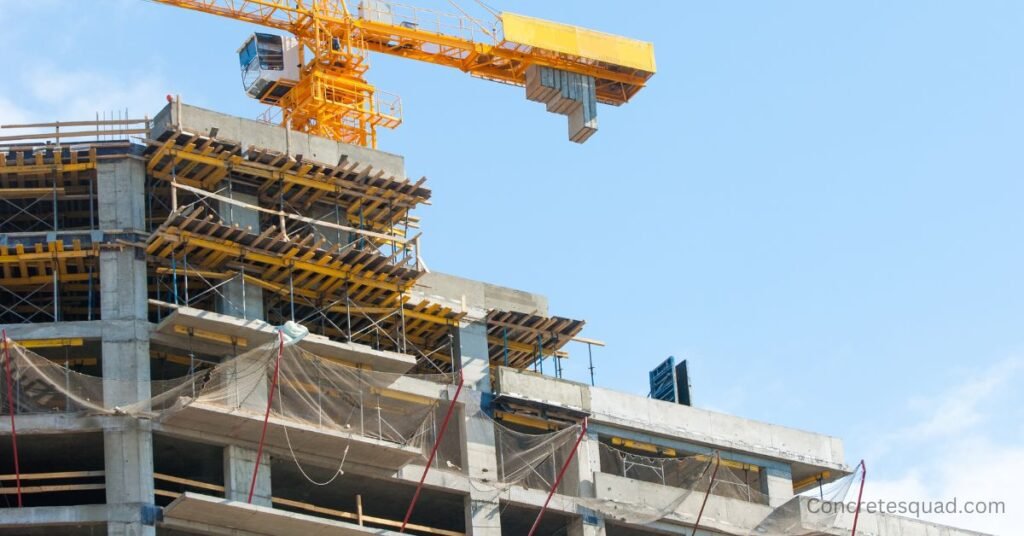
Lightweight concrete is an innovative material characterized by its reduced density, typically ranging from 90 to 115 lb/ft³. This is achieved using lightweight aggregates, which enhances durability and thermal insulation while lowering structural loads. Its applications are significant in both residential and commercial construction, enabling faster installation and reduced energy costs. Additionally, it supports sustainable practices by optimizing material use and minimizing environmental impact. The benefits encompass improved workability, lower transportation costs, and design flexibility conducive to intricate architectural projects. To further explore its transformative potential in modern construction, one can investigate recent developments and applications.
Utilizing specific aggregates, lightweight concrete is defined as a type of concrete that has a lower density than conventional concrete, typically ranging from 90 to 115 pounds per cubic foot. This reduced density is achieved by incorporating lightweight aggregates, such as expanded clay, shale, or pumice, which replace traditional heavier aggregates like gravel and sand. The choice of these aggregates significantly influences the overall concrete density and its structural characteristics.
Lightweight concrete offers various advantages in construction applications, primarily due to its reduced weight. This property facilitates easier handling, transportation, and placement, ultimately leading to lower overall project costs and enhanced efficiency. Additionally, the lower concrete density contributes to reduced dead loads on structural elements, allowing for more innovative architectural designs and the potential for longer spans without compromising structural integrity.
Furthermore, the use of lightweight aggregates can enhance thermal insulation properties, contributing to energy efficiency in buildings.
As the construction industry continues to evolve, lightweight concrete stands out as a versatile material, offering solutions that align with contemporary demands for sustainability, efficiency, and performance in diverse construction projects.
Lightweight concrete possesses several key properties that distinguish it from conventional concrete, primarily stemming from its reduced density and the nature of its aggregates. These properties enhance its applicability in various construction scenarios, particularly where weight considerations are critical.
These key properties not only facilitate innovative design solutions but also contribute to the sustainability of construction practices by minimizing resource consumption and energy use.
Understanding these characteristics is essential for engineers and architects when selecting materials for specific applications.
The incorporation of lightweight concrete in residential applications offers several advantages that align with modern construction demands. One significant benefit is the ability to construct lightweight foundations, which reduce the overall weight of the structure. This property is particularly advantageous in areas with challenging soil conditions, where traditional concrete may not provide the necessary support without extensive and costly reinforcement.
Additionally, lightweight concrete contributes to enhanced energy efficiency in residential buildings. Its thermal insulation properties help regulate indoor temperatures, thereby reducing energy consumption for heating and cooling. This efficiency not only lowers utility costs for homeowners but also contributes to a more sustainable living environment.
Furthermore, the use of lightweight concrete can streamline construction processes. Its reduced weight allows for faster handling and installation, potentially decreasing labor costs and project timelines.
As residential construction continues to evolve, the integration of lightweight concrete will play a pivotal role in meeting the needs for cost-effective, energy-efficient, and structurally sound homes.
In commercial construction, the adoption of lightweight concrete presents a range of benefits that align with the sector's demands for efficiency and innovation. This material is particularly advantageous for various applications, enhancing structural performance while minimizing weight.
Key commercial applications include:
Infrastructure projects increasingly benefit from the integration of lightweight concrete, which enhances both structural integrity and overall performance. The use of lightweight aggregates, such as expanded clay, shale, or pumice, significantly reduces the density of concrete while maintaining essential mechanical properties. This reduction in weight is particularly advantageous for large-scale infrastructure such as bridges, highways, and tunnels, where minimizing load on supporting structures is critical.
Lightweight concrete contributes to infrastructure durability by improving resistance to cracking and environmental degradation. The decreased self-weight allows for longer spans in structural applications, reducing the need for extensive support systems and enabling more efficient construction processes.
Additionally, the thermal efficiency of lightweight concrete can lead to lower energy costs in climate-sensitive environments.
Innovative applications include the use of lightweight concrete in precast elements, which can be manufactured off-site to expedite project timelines. The versatility and adaptability of this material make it an ideal choice across various infrastructure applications.
Ultimately, lightweight concrete not only addresses the demands for strength and durability but also promotes sustainability by reducing material consumption and optimizing construction methodologies.
Lightweight concrete offers significant advantages in construction, primarily through the reduction of structural load on foundations and supporting elements.
This reduction not only enhances the overall efficiency of the building design but also contributes to improved thermal insulation properties.
Consequently, the use of lightweight concrete can lead to cost savings in both structural support and energy consumption over the lifespan of the structure.
Although the use of traditional concrete has long been the standard in construction, the adoption of lightweight concrete offers significant advantages, particularly in reducing structural load.
The inherent properties of lightweight concrete enhance load distribution across structures, thereby improving overall structural efficiency. This reduction in weight allows for innovative design solutions, enabling architects and engineers to optimize material usage without compromising stability.
Key benefits of reduced structural load include:
Utilizing lightweight concrete significantly enhances thermal insulation properties in construction. This material, characterized by its lower density, effectively reduces thermal conductivity, thereby improving the overall thermal performance of buildings. Lightweight concrete incorporates various insulation materials, such as expanded polystyrene or lightweight aggregates, which contribute to its superior insulating capabilities.
The implementation of lightweight concrete in construction allows for a reduction in energy consumption for heating and cooling purposes. By minimizing heat transfer between the interior and exterior environments, structures achieve a more stable thermal environment, ultimately leading to lower operational costs and increased energy efficiency.
Moreover, the enhanced thermal insulation provided by lightweight concrete can contribute to improved occupant comfort. Maintaining consistent indoor temperatures reduces the likelihood of temperature fluctuations, which can be particularly beneficial in regions with extreme weather conditions.
In addition, the use of lightweight concrete in building envelopes can facilitate compliance with stringent energy codes and sustainability standards. As the construction industry increasingly prioritizes eco-friendly practices, lightweight concrete emerges as a viable solution that not only meets thermal performance requirements but also supports broader environmental goals.
The environmental impact of lightweight concrete is a critical consideration in modern construction practices. As the industry increasingly prioritizes sustainability practices, lightweight concrete offers several advantages that can contribute to reducing the overall carbon footprint of construction projects.
Emerging trends in lightweight concrete are poised to revolutionize the construction industry, driven by advancements in materials science and a growing emphasis on sustainability. The integration of innovative materials, such as recycled aggregates and bio-based additives, enhances the performance and environmental profile of lightweight concrete. These developments foster a shift toward sustainable practices, reducing the carbon footprint of construction projects.
| Trend | Description | Benefits |
|---|---|---|
| Use of Recycled Materials | Incorporation of waste materials into concrete mixes | Minimizes landfill waste; reduces resource consumption |
| High-Performance Mixes | Development of engineered lightweight concrete | Improved strength-to-weight ratio; enhanced durability |
| Smart Lightweight Concrete | Integration of sensors for structural health monitoring | Enhances safety; allows for proactive maintenance |
The focus on these trends indicates a significant potential for lightweight concrete to meet the demands of modern construction while adhering to environmental standards. As the industry progresses, the adoption of such innovative materials will be critical in achieving a sustainable future in construction. By leveraging these advancements, stakeholders can optimize performance and ensure responsible resource management.
In conclusion, lightweight concrete presents a potent solution for modern construction challenges, showcasing significant structural strength while substantially reducing weight. The versatile applications span residential, commercial, and infrastructure projects, promoting both performance and practicality. The environmental advantages further enhance its appeal, aligning with sustainable development goals. As innovations continue to emerge, the future of lightweight concrete promises to usher in a new era of efficient, eco-friendly building practices, ensuring enduring excellence in the construction industry.
 Call Now