A solid foundation is like the roots of a tree; without them, the structure can’t thrive. At Concrete Squad Florida, we recognize the critical role that commercial building foundations play in ensuring stability and durability. With our extensive experience, we’ve honed our approach to address the unique challenges that each project presents. But what factors truly influence the design and installation of these essential structures? Let’s explore this together.
When we think about commercial building projects, we often focus on aesthetics and functionality, but we can’t overlook the importance of a strong foundation. A solid foundation is essential because it supports the entire structure, ensuring durability and stability over time. Without it, even the most beautiful designs can face serious setbacks, like cracks and settling.
We need to remember that a strong foundation helps prevent costly repairs and safety hazards down the line. It also plays a significant role in complying with building codes and regulations, which protect both the occupants and the investment. By prioritizing a strong foundation, we set the stage for a successful project that stands the test of time.
In the end, we’re not just building a commercial space; we’re creating an environment where businesses can thrive, and that all starts with a reliable foundation.
A strong foundation isn’t just about stability; it’s also about choosing the right type for our specific project needs. In commercial construction, we typically consider three main types of foundations: shallow foundations, deep foundations, and mat foundations.
Shallow foundations, like spread footings, sit close to the surface and are ideal for lighter structures. They’re cost-effective and relatively easy to install.
Deep foundations, such as piles or drilled shafts, extend deeper into the ground, providing support for heavier buildings or those on unstable soil.
Lastly, mat foundations, or raft foundations, spread the load of a structure over a large area, making them suitable for large buildings or those in areas with poor soil conditions.
Understanding the factors influencing foundation design is essential for guaranteeing the longevity and safety of our commercial buildings. Several key elements shape our decisions, starting with soil conditions. We need to evaluate soil type, load-bearing capacity, and drainage characteristics to determine the best foundation type.
Next, we consider the building’s size and purpose. A warehouse, for instance, will have different requirements than a retail space. This affects the depth and width of the foundation we choose.
Environmental factors also play a role; seismic activity, flooding potential, and climate conditions must be assessed to guarantee stability and durability.
Lastly, local building codes and regulations guide our design choices, guaranteeing compliance and safety. By carefully evaluating these factors, we can create a solid foundation that meets our building’s specific needs and enhances its overall performance.
As we begin the site assessment and preparation phase, we can’t underestimate the importance of soil testing. This step guarantees we comprehend the ground conditions before laying the foundation. Once we have that information, we can move on to effective site clearing procedures to set the stage for construction.
While we often focus on the visible aspects of construction, soil testing plays an essential role in guaranteeing the stability and longevity of commercial building foundations. By analyzing soil composition, density, and drainage properties, we can identify any potential issues that might affect our structure. This testing helps us understand the load-bearing capacity of the soil, allowing us to design foundations tailored to these conditions. It also reveals the presence of contaminants that could harm the building or its occupants. Conducting thorough soil tests before construction not only saves us from costly repairs down the line but also enhances safety. Ultimately, investing in soil testing guarantees that our foundations are built on solid ground, setting the stage for a successful project.
Before we break ground on a new commercial building, we need to guarantee the site is thoroughly prepared. That starts with site clearing procedures, where we assess the area and remove any obstacles, like trees, debris, and old structures. We’ll conduct an inspection to identify hazardous materials and make sure the land is safe for construction. Once we’ve cleared the site, we’ll level the ground, which helps create a stable foundation. We’ll also address drainage issues to prevent future problems. This process is vital, as it sets the stage for a strong and durable foundation. By taking these steps, we guarantee a solid start to your commercial project, minimizing potential issues down the line.
As we move forward, we can’t underestimate the importance of soil testing in foundation installation. Understanding the types of soil analysis available helps us choose the right approach for our project. Let’s explore how these tests play an essential role in ensuring a solid foundation.
Understanding the importance of soil testing is essential for anyone involved in commercial building foundation installation. We need to know that soil is the foundation of our structures, and its characteristics directly affect stability and safety. By conducting soil tests, we can identify factors like soil type, moisture levels, and compaction, which help us make informed decisions. These assessments not only guide our design choices but also prevent costly issues down the road. Additionally, knowing the soil’s bearing capacity helps us determine the appropriate foundation type, ensuring longevity and durability. In short, soil testing gives us the knowledge we need to build confidently and responsibly, safeguarding our investments and the future of our projects.
When it comes to soil analysis, there are several key types we should consider to guarantee a solid foundation for our commercial buildings. First, we’ve got the standard penetration test (SPT), which helps us assess soil strength and density. Then, there’s the cone penetration test (CPT), providing us with detailed information about soil stratigraphy. Next, we should look at unconfined compressive strength tests, essential for evaluating cohesive soils. Additionally, we can perform soil classification tests, which help us understand soil types and their properties. Finally, let’s not forget about moisture content analysis, critical for determining how water interacts with our soil. By utilizing these methods, we can make informed decisions that enhance our building’s stability and longevity.
Choosing the right concrete mix is vital for guaranteeing the stability and durability of a commercial building’s foundation. It influences how well the structure withstands various stresses over time. We need to take into account a few key factors when selecting the mix.
Strength Requirements: We should assess the load-bearing needs of the building. Higher strength mixes (like 4000 psi) are often necessary for heavy structures.
Environmental Conditions: Let’s evaluate the local climate. If the area experiences freeze-thaw cycles, we might need a mix with added air entrainment to improve durability.
Workability: It’s essential that the mix is easy to work with. A good balance of water-cement ratio guarantees we can easily place and finish the concrete without compromising strength.
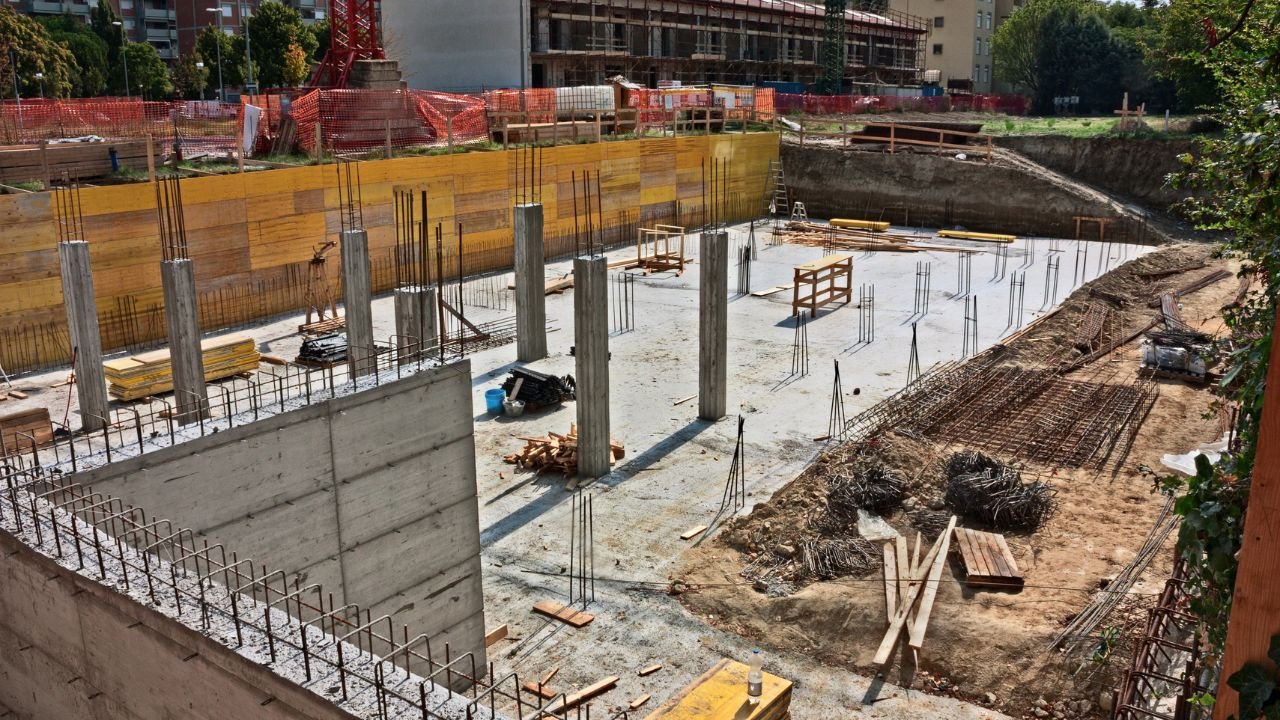
With the right concrete mix selected, we can move on to the foundation installation process, which plays an essential role in the overall integrity of the commercial building. First, we’ll excavate the site, ensuring we have a level base and removing any debris. Next, we’ll set up forms to define the foundation’s shape, taking care to align everything accurately.
Once the forms are in place, we’ll pour the concrete, filling the forms evenly. It’s important to vibrate the concrete to eliminate air pockets, ensuring a solid structure. After pouring, we’ll smooth the surface and allow the concrete to cure properly, which is critical for strength and durability.
Finally, once cured, we’ll remove the forms and prepare the area for the next construction phase. By following these steps carefully, we guarantee a robust foundation that supports the entire building effectively.
While we focus on the foundation installation, it’s essential not to overlook the importance of drainage systems in commercial buildings. Proper drainage helps to protect the integrity of the foundation and overall structure. Here’s why we should prioritize it:
Prevent Water Accumulation: A well-designed drainage system prevents water from pooling around the foundation, reducing the risk of erosion and structural damage.
Mold and Mildew Prevention: Effective drainage minimizes moisture levels, which can lead to mold and mildew. This not only affects the building’s integrity but also the health of its occupants.
Long-Term Cost Savings: Investing in a robust drainage system now can save us from costly repairs later. By reducing water-related issues, we protect the building and enhance its lifespan.
Incorporating a proper drainage system is a crucial step in ensuring our commercial buildings stand strong and safe for years to come.
When it comes to ensuring the durability of our commercial building foundations, we need to take into account effective reinforcement techniques. Steel reinforcement bars, fiber reinforcement methods, and post-tensioning techniques all play vital roles in enhancing structural integrity. Let’s explore how each of these methods contributes to a stronger foundation.
Steel reinforcement bars, commonly known as rebar, play an essential role in enhancing the durability of commercial building foundations. By integrating rebar into our concrete structures, we can greatly improve their strength and longevity. Here are three key benefits of using rebar in foundation installations:
Incorporating rebar in our foundation projects guarantees that we’re building for the future, creating strong and reliable structures.
As we explore innovative reinforcement techniques, fiber reinforcement methods have emerged as a game-changer for enhancing the durability of commercial building foundations. These methods involve incorporating synthetic or natural fibers into concrete mixtures, considerably improving their tensile strength and resistance to cracking. By evenly distributing fibers within the mix, we create a composite material that can withstand stress better than traditional concrete alone. This not only leads to longer-lasting foundations but also minimizes maintenance costs over time. Additionally, fiber reinforcement can reduce shrinkage and improve impact resistance, making it an ideal choice for various commercial applications. Overall, these techniques allow us to build more resilient structures that stand the test of time and environmental challenges.
Building on the advancements in fiber reinforcement methods, post-tensioning techniques offer another powerful approach to enhancing the durability of commercial building foundations. This method involves tensioning high-strength steel tendons within the concrete, which helps manage stress and minimize cracking. Here are three key benefits of post-tensioning:
When we undertake the installation of a commercial building foundation, guaranteeing compliance with building codes is essential. These regulations are designed to guarantee safety, structural integrity, and environmental protection. By adhering to these codes, we not only protect our investment but also the future occupants of the building.
Here’s a quick overview of key compliance aspects:
| Aspect | Importance |
|---|---|
| Structural Standards | Guarantees safety and stability |
| Zoning Laws | Regulates land use and building height |
| Material Specifications | Ensures quality and durability |
| Accessibility Guidelines | Promotes inclusivity and safety |
| Environmental Regulations | Protects natural resources and ecosystems |
When it comes to project management for our foundation installation, efficient scheduling practices are key to keeping everything on track. We need to coordinate closely with contractors to guarantee that every aspect of the project aligns smoothly. By focusing on these elements, we can minimize delays and enhance productivity.
Efficient scheduling practices are essential for the successful installation of commercial building foundations, as they help us minimize delays and manage resources effectively. By implementing a solid schedule, we can guarantee that every phase of the project runs smoothly. Here are three key practices we follow:
To guarantee the successful installation of commercial building foundations, we must coordinate closely with our contractors throughout the project. Effective communication is key to keeping everyone on the same page, ensuring that timelines are met and expectations are clear. By working together, we can address potential issues before they become major setbacks.
| Task | Timeline |
|---|---|
| Initial Planning | Week 1 |
| Site Preparation | Week 2 |
| Foundation Pouring | Week 3 |
Regular check-ins help us track progress and adjust as needed. Staying proactive allows us to maintain a smooth workflow, ensuring that the installation remains on schedule and meets the highest standards of quality. Let’s commit to this collaborative effort!
Understanding the cost considerations for foundation work is essential, especially since it can greatly impact the overall budget of a commercial building project. We should take a closer look at several key factors that contribute to these costs.
Site Preparation: The condition of the site directly influences costs. We may need to clear the land, remove debris, or even conduct soil tests, all of which can add to our expenses.
Materials: The type of foundation we choose, whether it’s slab, crawl space, or basement, will determine our material costs. We must consider both the quality and quantity required.
Labor: Skilled labor is vital for foundation installation. We should factor in the costs associated with hiring experienced contractors, as their expertise can prevent costly mistakes down the road.
While managing costs is a significant part of any foundation project, we also need to be aware of the common challenges that can arise during installation. Weather conditions often play a essential role; heavy rain or extreme heat can disrupt our timeline and affect the curing process. Soil conditions can also pose challenges; unstable or expansive soils may require additional reinforcement or specialized techniques to guarantee the foundation’s integrity.
Moreover, unforeseen obstacles like underground utilities may complicate our plans, leading to delays and increased costs. Communication among the project team is critical; misunderstandings can result in errors that compromise the foundation’s quality. Finally, adhering to local building codes can be tricky, requiring us to stay updated on regulations to avoid potential fines or rework. By recognizing these challenges upfront, we can better prepare and navigate the foundation installation process more effectively.
When we choose professional installation services for our commercial building foundations, we not only guarantee quality workmanship but also gain peace of mind. These experts bring invaluable experience and knowledge to the table, ensuring our foundation is built to last. Here are some key benefits we enjoy:
Choosing Concrete Squad Florida for our commercial building foundation installation means partnering with a team that prioritizes quality and customer satisfaction. We recognize the importance of a strong foundation, and we’re committed to delivering results that stand the test of time.
Here’s why we stand out:
| Quality | Experience | Customer Focus |
|---|---|---|
| High-grade materials | Over 20 years in the industry | We listen to your needs |
| Precision workmanship | Skilled professionals | Tailored solutions |
| Timely project delivery | Proven track record | Ongoing support |
| Compliance with standards | Safety-first approach | Transparent pricing |
When you choose us, you’re not just getting a service; you’re gaining a reliable partner dedicated to excellence. We’re here to turn your vision into reality, ensuring your commercial foundation is built to last. Let’s build something great together!
Typically, the foundation installation process takes about 2 to 4 weeks. Notably, studies show that nearly 30% of construction delays stem from foundation issues. We recognize how vital it is to keep things on schedule. Factors such as site preparation, weather, and foundation type can influence the timeline. By planning properly and addressing potential challenges early, we can help guarantee a smoother installation process, keeping your project on track.
When we tackle commercial foundation work, we usually need several permits. These often include building permits, zoning permits, and environmental permits, depending on the project’s scope. We also might require specific permits for excavation and utility connections. It’s crucial to check with local authorities to guarantee we have all the necessary approvals before starting. This way, we avoid delays and keep everything compliant with regulations. Let’s make certain we’re all set before breaking ground!
Yes, weather can definitely affect foundation installation timelines. When it’s rainy or extremely cold, for instance, we might face delays due to safety concerns and material performance. Wet conditions can hinder proper curing of concrete, while freezing temperatures can lead to complications in the installation process. We always keep a close eye on forecasts to adjust our schedules and guarantee the best conditions for a successful foundation installation.
When it comes to warranty options for foundation work, we have you taken care of. Typically, we offer limited warranties that last anywhere from one to ten years, depending on the specifics of the project. These warranties usually cover defects in workmanship and materials. We also recommend checking with your contractor about extended warranties for added peace of mind. Understanding your options guarantees you’re protected and can enjoy your foundation for years to come.
To maintain our foundation after installation, we should regularly inspect for cracks and water pooling. Keeping gutters clean helps direct water away, and we need to guarantee proper drainage around the foundation. It’s also important to monitor soil moisture levels; too much or too little can cause settling. Finally, we should consider professional inspections every few years to catch potential issues early. Taking these steps will help keep our foundation strong and stable.
 Call Now