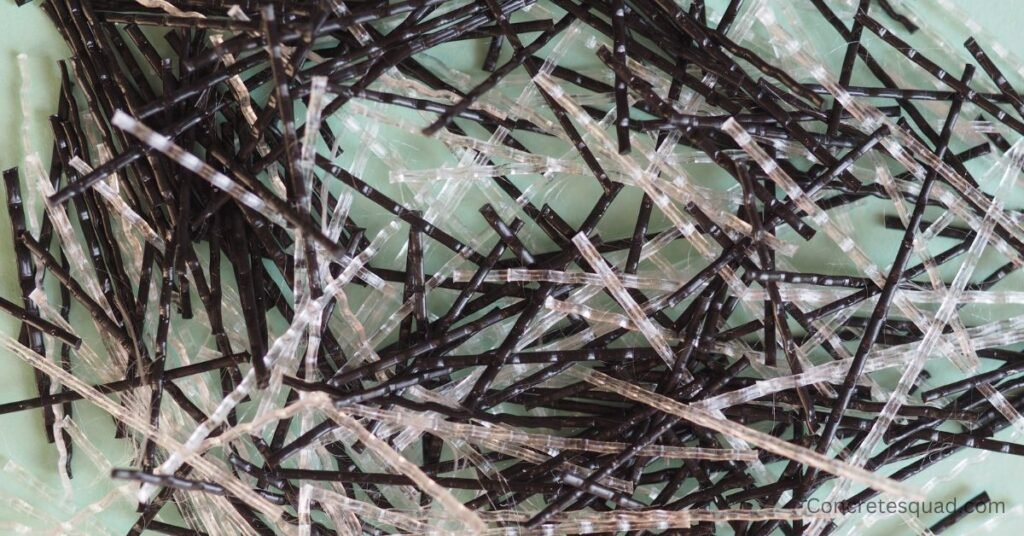
Fiber reinforcement is essential in high-strength concrete, significantly enhancing its mechanical properties and structural performance. By incorporating fibers such as steel, polypropylene, or natural variants, the concrete exhibits improved tensile strength, ductility, and crack resistance. These fibers mitigate crack formation and propagation by acting as bridging agents, thus ensuring durability and longevity. Furthermore, they facilitate uniform stress distribution, reduce shrinkage cracking, and enhance impact resistance. Such benefits not only maintain structural integrity but also streamline construction processes. As advancements continue, further innovations in fiber materials promise to optimize performance even more effectively.
Fiber reinforcement refers to the incorporation of discrete fibers into concrete mixtures to enhance specific mechanical properties and overall performance. This technique is utilized to improve tensile strength, ductility, and resistance to cracking, thereby extending the lifespan and durability of concrete structures.
Various fiber types can be employed, including steel, polypropylene, glass, and natural fibers, each offering unique benefits and influencing the concrete matrix differently.
The effectiveness of fiber reinforcement largely depends on the reinforcement methods used during mixing and placement. Fibers can be uniformly distributed throughout the concrete matrix, ensuring consistent performance characteristics, or they can be strategically placed to target specific areas of stress.
Moreover, the aspect ratio, volume fraction, and surface treatment of the fibers play critical roles in determining the overall effectiveness of the reinforcement.
Understanding the intricacies of fiber types and reinforcement methods is crucial for engineers and architects who aim to optimize the mechanical properties of high-strength concrete.
The careful selection and implementation of fiber reinforcement strategies can lead to significant advancements in structural performance, enabling the construction of safer and more resilient infrastructures.
Fiber reinforcement in high-strength concrete encompasses various types, each offering distinct advantages and applications.
Steel fibers are renowned for enhancing tensile strength and toughness, while synthetic fibers provide versatility in different environmental conditions.
Additionally, natural fibers present sustainable alternatives, contributing to both performance and ecological benefits.
Incorporating steel fibers into high-strength concrete significantly enhances its mechanical properties and durability. The primary advantages of steel fibers lie in their ability to improve tensile strength, ductility, and toughness. This reinforcement method mitigates the formation and propagation of cracks, thereby extending the service life of concrete structures.
Steel fiber applications are particularly beneficial in scenarios requiring enhanced structural integrity, such as in industrial floors, pavements, and precast elements. The addition of steel fibers can lead to a reduction in shrinkage cracking, which is critical in maintaining the aesthetic and functional performance of concrete surfaces.
Furthermore, the improved impact resistance and fatigue performance make steel fiber-reinforced concrete ideal for heavy-load applications and environments subject to dynamic loading.
Another significant benefit is the enhanced post-crack behavior, allowing structures to maintain load-carrying capacity even after initial cracking occurs. This characteristic is essential for safety and reliability in infrastructure design.
Various types of synthetic fibers have emerged as effective reinforcement options in high-strength concrete, each offering unique properties that cater to specific performance requirements. Common synthetic fiber types include polypropylene, nylon, and polyester, which are utilized for their enhanced tensile strength, durability, and resistance to environmental factors.
Polypropylene fibers, for instance, are known for their ability to mitigate plastic shrinkage cracking, ensuring structural integrity during the curing process. Nylon fibers, on the other hand, exhibit superior toughness and ductility, making them suitable for applications where dynamic loads are prevalent.
Polyester fibers contribute to increased impact resistance and can be beneficial in applications exposed to severe weather conditions.
The selection of synthetic fibers for fiber reinforcement applications is critical, as it directly influences the mechanical behavior and longevity of high-strength concrete. By integrating these fibers, engineers can significantly improve crack resistance, enhance load-bearing capacity, and prolong the service life of concrete structures.
Ultimately, the strategic application of synthetic fibers in high-strength concrete not only meets the demands of modern construction but also promotes sustainability through improved material performance.
Natural fibers offer an alternative approach to reinforcement in high-strength concrete, complementing the benefits provided by synthetic options. Among the various natural fibers, bamboo and coconut fibers stand out due to their unique properties and availability.
Bamboo fibers are renowned for their high tensile strength and modulus of elasticity, which can significantly enhance the mechanical performance of concrete. Their lightweight nature and ability to bond well with cement matrices make them an effective reinforcement choice, promoting improved ductility and impact resistance in concrete structures.
Coconut fibers, derived from the husk of coconuts, exhibit excellent resistance to environmental degradation and provide good tensile strength. These fibers can contribute to increased flexural strength and reduced brittleness in concrete, making them suitable for various applications, including pavements and load-bearing walls.
Both bamboo and coconut fibers are renewable resources, aligning with sustainable construction practices. Their incorporation into high-strength concrete not only improves material performance but also reduces the carbon footprint associated with traditional synthetic fibers.
Thus, natural fiber options present a viable path toward more sustainable and resilient concrete solutions.
The integration of fiber reinforcement in high-strength concrete offers a multitude of advantages that enhance both its mechanical properties and durability. One of the primary benefits includes improved performance metrics, particularly in terms of tensile strength and ductility. Fibers, whether synthetic or natural, distribute stress more evenly throughout the concrete matrix, reducing the likelihood of crack propagation. This characteristic is critical in applications where structural integrity is paramount.
Additionally, fiber reinforcement contributes to the overall economic advantages of high-strength concrete applications. By increasing the concrete's resilience to cracking and deformation, the need for extensive maintenance and repairs diminishes, leading to lower lifecycle costs.
Furthermore, the enhanced durability of fiber-reinforced concrete can reduce the thickness of sections required, thereby optimizing material usage and saving on initial construction expenses.
Moreover, the incorporation of fibers can facilitate the use of high-strength concrete in extreme environments, thereby extending the service life of structures.
These benefits collectively underscore the significant role of fiber reinforcement in advancing the performance and economic viability of high-strength concrete solutions across various construction sectors.
The incorporation of fiber reinforcement in high-strength concrete significantly enhances its durability, particularly through improved crack resistance and impact resistance.
Fibers effectively distribute stress across the matrix, mitigating localized failures and reducing the likelihood of crack propagation under various loading conditions.
This increased resilience not only extends the lifespan of concrete structures but also enhances their performance in demanding environments.
In the realm of construction materials, the integration of fiber reinforcement into high-strength concrete significantly enhances crack resistance, thereby improving overall durability. This enhancement is critical as it mitigates the onset and progression of crack propagation, which can severely compromise structural integrity over time.
Fiber reinforcement modifies the stress distribution within the concrete matrix. When external loads are applied, the fibers help to redistribute the stresses more uniformly throughout the material, reducing localized stress concentrations that often lead to cracking. This is particularly important in high-strength concrete, where the inherent brittleness can make it more susceptible to cracking under tension.
Moreover, the presence of fibers acts as a barrier to crack growth. As cracks begin to form, the fibers intersect and bridge across the crack faces, effectively holding them together and preventing further widening. This bridging action not only limits the extent of damage but also enhances the material's ability to sustain loads after initial cracking has occurred.
Enhanced impact resistance is a crucial benefit of incorporating fiber reinforcement in high-strength concrete. This enhancement significantly improves the impact performance of concrete structures, making them more resilient to dynamic loads and sudden stresses. Fiber reinforcement, whether through steel, polypropylene, or other materials, contributes to the microstructural integrity of concrete, effectively distributing stresses and preventing localized failure.
The incorporation of fibers improves energy absorption capabilities, which is vital in applications where impact loads are prevalent, such as in pavements, industrial floors, and protective barriers. When an impact occurs, the fibers bridge cracks that may form, allowing for the redistribution of stress and enhancing the overall toughness of the material. This reduction in crack propagation not only maintains structural integrity but also prolongs service life.
Moreover, fiber-reinforced high-strength concrete exhibits reduced degradation under repeated loading conditions, which is critical for maintaining durability over time. The synergistic effect of fibers within the matrix leads to superior resistance against impact-related damage, ensuring that structures can withstand not only immediate impacts but also the cumulative effects of wear and environmental factors.
Consequently, the use of fiber reinforcement is paramount for enhancing impact resistance in high-strength concrete applications.
Load-bearing capacity is a critical parameter in the performance of high-strength concrete, where fiber reinforcement plays a vital role in enhancing structural integrity. The incorporation of fibers—be it steel, polypropylene, or glass—significantly influences the load distribution within the concrete matrix. By effectively bridging micro-cracks and preventing their coalescence, fibers contribute to a more uniform transfer of loads across the material.
This enhanced load distribution results in an increased capacity to withstand applied forces, thereby improving the overall performance of structural elements. The fibers act to distribute tensile stresses more evenly throughout the concrete, reducing localized stress concentrations that could lead to failure.
Additionally, the presence of fiber reinforcement minimizes the risk of brittle failure, a common drawback associated with conventional high-strength concrete.
Moreover, the synergy between fibers and the concrete matrix enhances ductility, allowing for greater energy absorption under loading conditions. This characteristic is particularly beneficial in seismic applications, where the ability to endure dynamic loads is paramount.
Ultimately, the integration of fiber reinforcement not only boosts load-bearing capacity but also fortifies the structural integrity of high-strength concrete, making it a preferred choice for demanding construction scenarios.
The incorporation of fiber reinforcement in high-strength concrete serves as an effective strategy for reducing cracking and shrinkage, which are critical concerns in the performance and longevity of concrete structures.
The presence of fibers mitigates various cracking mechanisms commonly associated with the hydration process and environmental factors, such as temperature fluctuations and moisture loss. These mechanisms include plastic shrinkage cracking and drying shrinkage cracking, both of which can compromise structural integrity.
Fiber reinforcement enhances shrinkage control by distributing tensile stresses more uniformly throughout the concrete matrix. This distribution minimizes the formation of micro-cracks, which can propagate and lead to larger, more detrimental cracks over time.
Additionally, fibers act as crack-bridging agents, providing resistance against crack opening and allowing for load transfer across cracks that may develop.
Experimental studies have demonstrated that incorporating fibers, such as steel or synthetic types, significantly reduces the incidence and severity of cracking in high-strength concrete. The result is a more durable and resilient material that can withstand the rigors of various environmental conditions, ensuring the longevity and reliability of concrete structures.
Application of fiber reinforcement in construction projects has revolutionized the approach to achieving high-performance concrete structures. The integration of fibers, whether synthetic, steel, or glass, enhances the mechanical properties of concrete, addressing critical challenges such as tensile strength, ductility, and crack resistance. Various fiber applications in concrete mix designs provide significant advantages, particularly in environments subjected to dynamic loads or extreme conditions.
The construction benefits of using fiber-reinforced concrete (FRC) are multifaceted. Firstly, FRC significantly reduces the risk of cracking during the curing process, thus ensuring longevity and durability of structures. Secondly, the improved tensile strength allows for greater load-bearing capacity, enabling architects and engineers to design more ambitious structures without compromising safety.
Additionally, fiber applications facilitate faster construction timelines, as they can streamline processes such as placement and finishing. Moreover, the use of fibers can minimize maintenance costs over the lifespan of a structure, as the enhanced durability reduces the likelihood of damage from environmental exposure.
As advancements in materials science continue to unfold, the landscape of fiber reinforcement in high-strength concrete is poised to evolve significantly. Emerging trends indicate a growing emphasis on the integration of sustainable materials, driven by environmental concerns and regulatory pressures. Innovations in bio-based fibers and recycled materials are gaining traction, offering potential performance enhancements while reducing the overall carbon footprint of concrete production.
Technological advancements in fiber manufacturing and application methods are also shaping the future of fiber reinforcement. The development of smart fibers, capable of monitoring structural integrity and providing real-time data, represents a significant leap forward. These fibers could lead to more efficient maintenance strategies and enhanced safety for infrastructures.
Furthermore, advancements in computational modeling are allowing for more precise predictions of fiber behavior within concrete matrices, facilitating the optimization of fiber types and dosages for specific applications. This analytical approach enables engineers to tailor high-strength concrete mixes that maximize performance, durability, and sustainability.
Consequently, the future of fiber reinforcement in high-strength concrete is not only about enhancing mechanical properties but also about embracing a holistic approach to construction that prioritizes sustainability and innovation.
In conclusion, fiber reinforcement plays a pivotal role in enhancing the performance of high-strength concrete by improving durability, increasing load-bearing capacity, and reducing cracking and shrinkage. Its diverse applications in construction projects demonstrate its versatility and effectiveness. As advancements in materials science continue, future trends in fiber reinforcement are likely to focus on innovative fibers, enhanced bonding techniques, and sustainable practices, further solidifying its significance in modern concrete technology.
 Call Now